

Reflection

Who is not in the room?
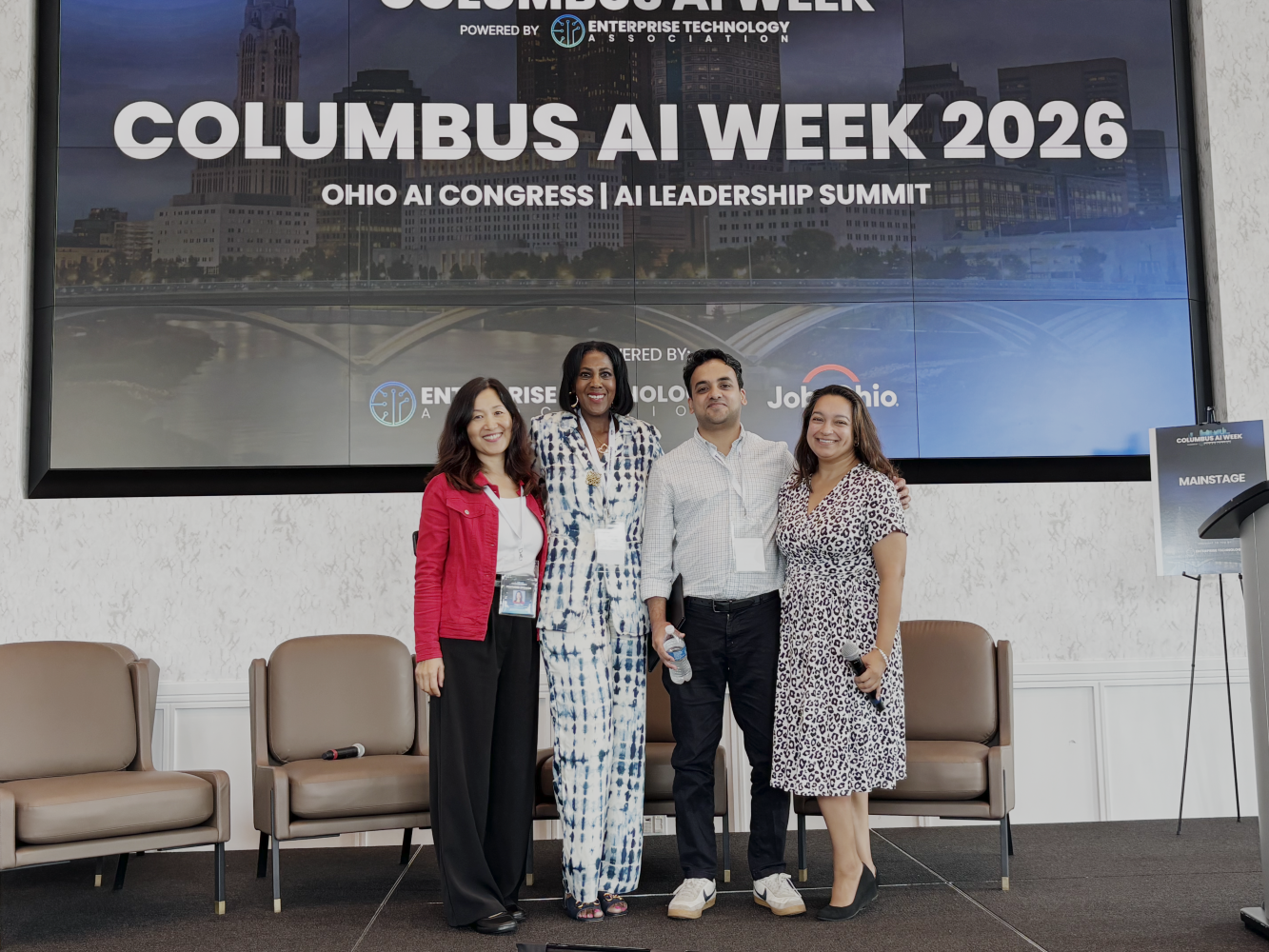
In September 2026, as a panelist of Columbus AI Week, hosted by Enterprise Technology Association, I asked two questions.
My first question was, "Who is older than 80 years old? "
Nobody raised their hands
My second question was, "Who is older than 70 years old?"
Nobody raised their hands
Those are the people who are left behind by AI.
I can continue with questions like these about gender, marginalized groups, economic status, etc.
As leaders, we all need to ask questions about who isn't in the room.
And the next question is: What can I do as a leader about this situation?
Since I started adopting AI in 2022, I've realized many groups of people are being left behind.
Since then, I've shared my AI practice with hundreds of people, including those who are 70, 80, or 90 years old.
A leader won't wait for others to call upon.
They call upon themselves to solve problems.
What's one problem that you called upon yourself to solve?
(With my fabulous panelists:Tracey Sigers, Arjun Kaarat, Swarna Solanki )
Life just got an upgrade
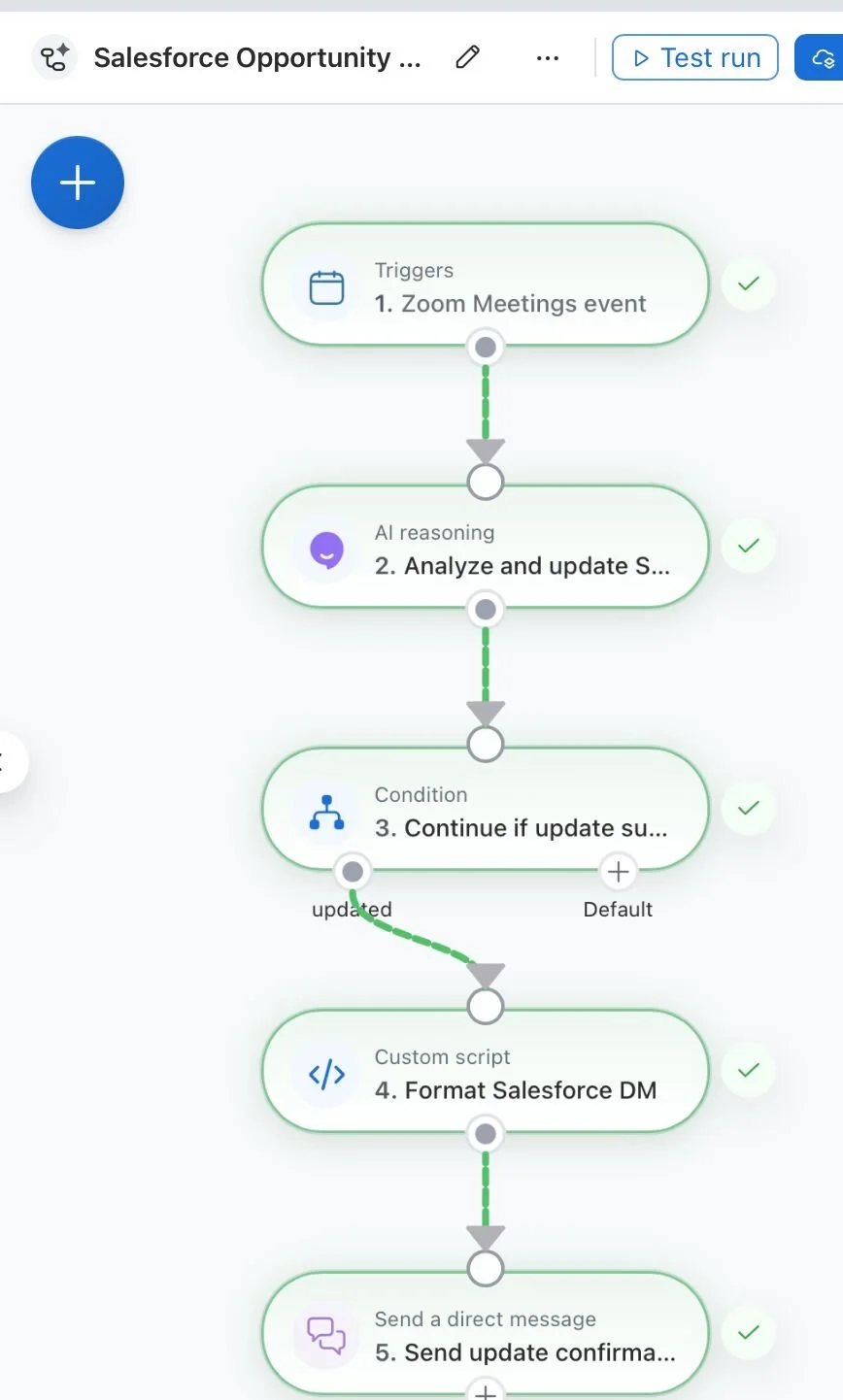
I dislike using CRM (Customer Relationship Management) applications, even though I understand the value 100%.
When I say "dislike," I mean I rarely use it, even though I've been paying for subscriptions for several years.
I was constantly pulled between "I need to use it" and "but I don't like doing it."
Well, life has just gotten a LOT better.
Recently, I integrated Zoom ZoomMate with Salesforce, and now ZoomMate can automatically update Salesforce.
Life is good 💃

He kicked at me
and said, "You need to be kicked at!"
"Yes, I am being kicked at all the time." I responded.
In life, we are all kicked at occasionally.
Sometimes, we are kicked at by choice.
We stepped into a new elevated role.
There are people we won't know in the room, and it seems daunting to understand the power dynamic.
There are strategies we are not familiar with, and contributing seems nerve-racking.
Other times, we are kicked at by external forces.
The company is not doing well; the entire department has been dismantled.
You and your manager don't get along, and day-to-day interactions are draining.
You thought you would be the next VP, but someone else got it.
We don't know when we will be kicked at.
However, if we are prepared mentally, knowing that we are not that special in life, we would be far more accepting and ready when life kicks at us.
Be ready to be kicked at sometimes.
He was joking, of course.
He didn't really kick at me, but his message did.
How I killed my addiction

I tend to become addicted.
I used to skip sleep on weekends to watch a series of dramas.
I spent several hours playing a mind game after I was told I was #1 on the leadership board, and I wanted to continue testing my logical reasoning ability.
If I am not careful, I can become addicted to many things.
I am no exception when it comes to being hooked.
The dopamine "injection" feels good.
Here is how I killed my addictions:
1️⃣ I don't ever start watching a drama series because I know I'll try to finish it overnight
2️⃣ I deleted the game app from my device because I know I won't have the discipline to just play for 15 minutes.
3️⃣ I set time limits on all social media so that I don't mindlessly scroll.
4️⃣ I don't have junk food in my pantry, so I don't need to attempt it.
What are your techniques to resist temptations?
The One and Only
I have walked into many rooms being the one and only. Sometimes it’s intimidating, other times, it’s lonely and uncomfortable. Have I thought about quitting? Many times! but I didn’t because I know I earned that seat and I have unique value to contribute. Instead of leaving, I became an integral part of those rooms. And I opened doors for others.
Being the only woman in a tech room can be tough, but we are equally talented. We may solve problems differently and in innovative ways. Our experiences matter. Take up space. Own it.
Every time you're present, you make room for others. You're changing the future. You're making a difference.
STAY
CONTRIBUTE
BRING OTHERS ALONG
What room have you walked into as the one and only?
What makes a great leader
There are so many traits making a great leader. Let's talk about a crucial element of leadership: TRUST
Trust is fragile. It takes tremendously time and effort to build, yet it can be shattered in an instant.
Trust is mutual, if you don't trust your team, your team won't trust you.
Trust is that your team members can share about their struggles honestly, and trusting that you will not use their vulnerabilities to work against them.
Trust is you, as a leader, advocate and protect your team members' benefits, especial during the critical moments.
Throughout my career, I prioritize to earn and keep my team's trust. Let me share an example.
During one year's performance review cycle, I told my manager that one of my skip level team members was ready for a promotion. The leader disagreed, but I persisted. I listed the achievements and impacts of that person, and insisted that we put the person into the promotion candidates pool and let the process decide whether they are qualified. The promotion process was stringent, consisting of formal nomination form of multiple pages, multiple interviews with different leaders, a candidate handler, mentors/sponsors, a scorecard from the interviewers. In the end, a committee of senior leaders made the final decision. My team member was the top #1 candidate among the list.
Through this process, I earned unwavering trust from that team member. Had I not "fight" for them, their career trajectory could be very different.
Remember, I took a career risk to "fight" for them because it was the right thing for do.
What are your ways to build trust with your team members?
I don’t know
When leaders say "I don't know", they are considered being vulnerable, honest, and authentic. They earn more respect.
When junior professionals or people in marginalized groups say "I don't know". They are considered incapable, incompetent, and lack of initiative. They trustworthiness can be impacted.
Is this fair? Absolutely not.
"I don't know" should be a neutral statement. It simply acknowledges a gap in knowledge. Leaders' "I don't know" doesn't need to be glorified, and the same statement from others doesn't need to be used against them.
Is your workplace safe for everyone to say "I don't know"?
Great leaders are great sales persons
There are many types of great leaders, one of those types is that they are great sales persons.
They don't sell you the product, they sell you the vision.
They don't sell you building a ship, they sell you the ocean and the horizon.
They don't sell you orders, they sell you ownership.
They don't sell you a paycheck, they sell you a future.
What else do they sell?
I can’t help but cry
I was preparing for a storytelling competition.
One step of that competition is to submit a video recording.
I rehearsed and recorded my story 30 times.
Something is missing.
Finally, I asked my husband, standing behind my camera.
I started to talk to him instead of the camera.
Several times, my eyes were watering.
My voice was choked up.
That’s what was missing.
The Human elements, the emotions, the connections.
The heartache, the tears.
Become a better human in the age of AI.
That’s irreplaceable.
The AI-Resilient Leader
Many professionals ask me,
“What skills should I be focusing on to stay relevant right now?”
My answer,
“Walk with 2 legs.
One leg is your technical skills,
the other?
Your human skills!”
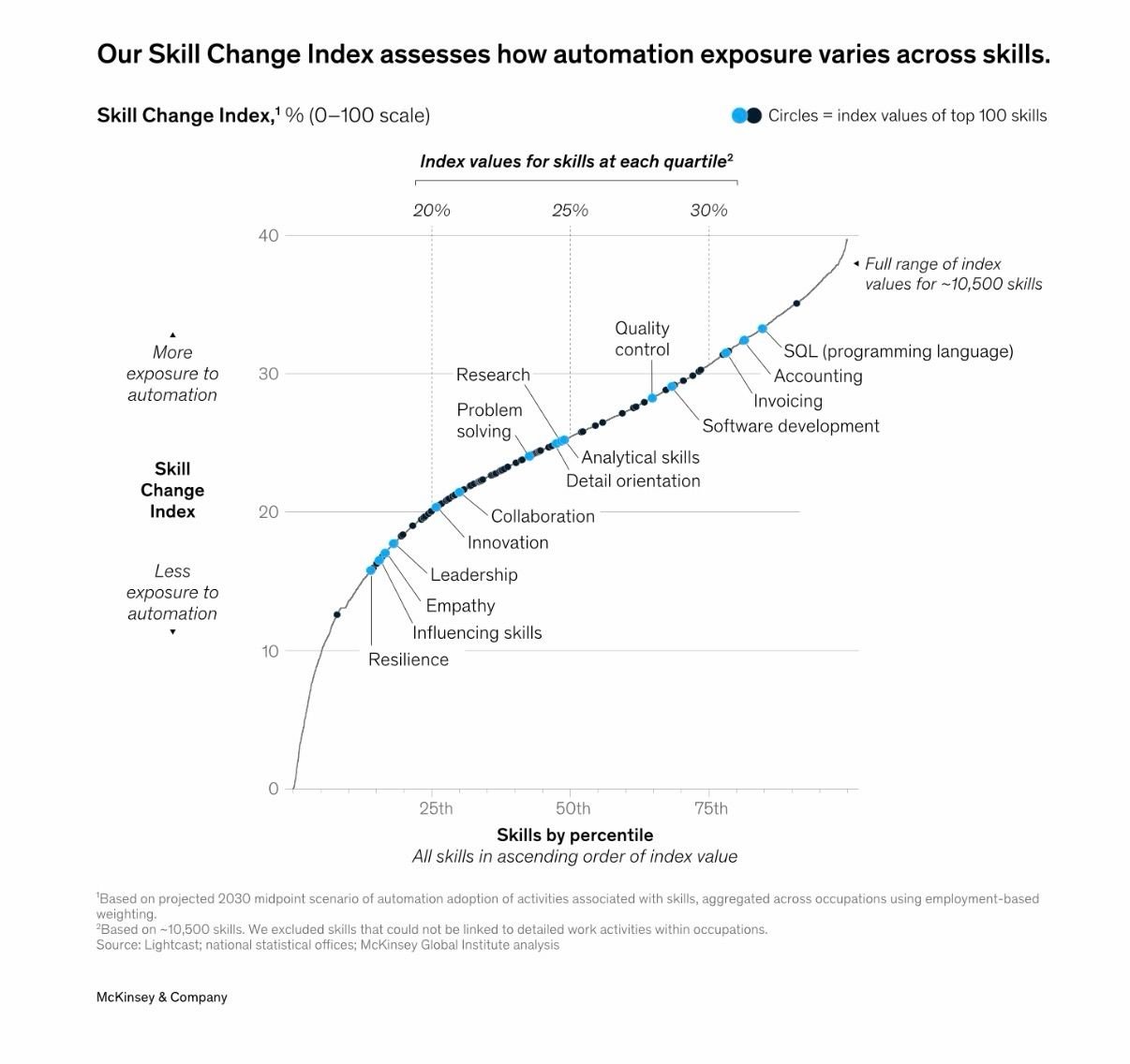
A recent graph by the McKinsey Global Institute , featured in their report "Agents, robots, and us: How AI reshapes work and skills in Europe", perfectly illustrates the answer.
The 𝗦𝗸𝗶𝗹𝗹 𝗖𝗵𝗮𝗻𝗴𝗲 𝗜𝗻𝗱𝗲𝘅 maps out which skills have the highest exposure to automation versus those that remain deeply human and resilient.
Technical skills such as SQL, accounting, invoicing, and software development are among the highest on the exposure scale.
But if you look at the lower-left corner, the zone with the least exposure to automation, you see a cluster of capabilities:
✅ Resilience
✅ Empathy
✅ Influencing skills
✅ Leadership
These are exactly the core pillars I focus on when coaching executives and rising leaders.
AI can write code, analyze a spreadsheet, and automate quality control.
But AI cannot build a high-performing team.
It cannot navigate complex organizational constructs with empathy.
It cannot build the deep resilience required to lead a company through a pivotal change.
The future belongs to leaders who intentionally develop their human capital.
If you want to build an AI-resilient career, stop focusing solely on technical optimization.
Start investing in your leadership presence, your emotional intelligence, and your ability to influence without authority.