
Reflection
Confidence CPRs
I have coached hundreds of tech leaders.
The majority of whom are women.
Many of them struggle with a lack of confidence, including senior leaders.
I worked hard for decades on boosting my confidence.
I used to be very frustrated with myself about why I couldn't be as confident as others.
Even though I was the top #1 student in a top engineering university.
Even though I have 3 Master's Degrees in Engineering.
Even though I was a career professional who got outstanding performance reviews.
Even though I was a leader at work, in the community, and at home.
The root of lack of confidence can be very deep, starting from one's childhood and the environment they grew up in.
Today, our focus isn't on digging deep into the why.
If you'd like, contact me about potential coaching sessions.
Today, we will focus on the HOW.
For many of the women I coach, this is the #1 roadblock.
We treat confidence like a prerequisite.
But the truth is that confidence does not need to be an input; it is an output.
To help my clients move from hesitation to action, I use the CPRs Process.
C – Courage
Don't wait for the fear to vanish.
Courage isn't the absence of fear; it's acting while your hands are shaking.
Have the courage to start.
P – Practice
Confidence is a muscle, not a personality trait.
The more you do, the more confident you become because you are capable.
Every time you complete a task you were nervous about, you're building a case against your inner critic.
R – Reflect
Blind action leads to burnout.
Reflection leads to mastery.
Recognize what works and what doesn't.
Notice how much more confident you have become.
S – Support
Confidence thrives in community.
We often feel we have to "prove it" on our own.
Build your circle.
Whether it's a mentor, a coach, or a peer group, having someone to cheer you on when you question yourself and can't take the first step.
Confidence is a product of showing up.
Which part of the CPRs process do you find the hardest?
577,774 feet
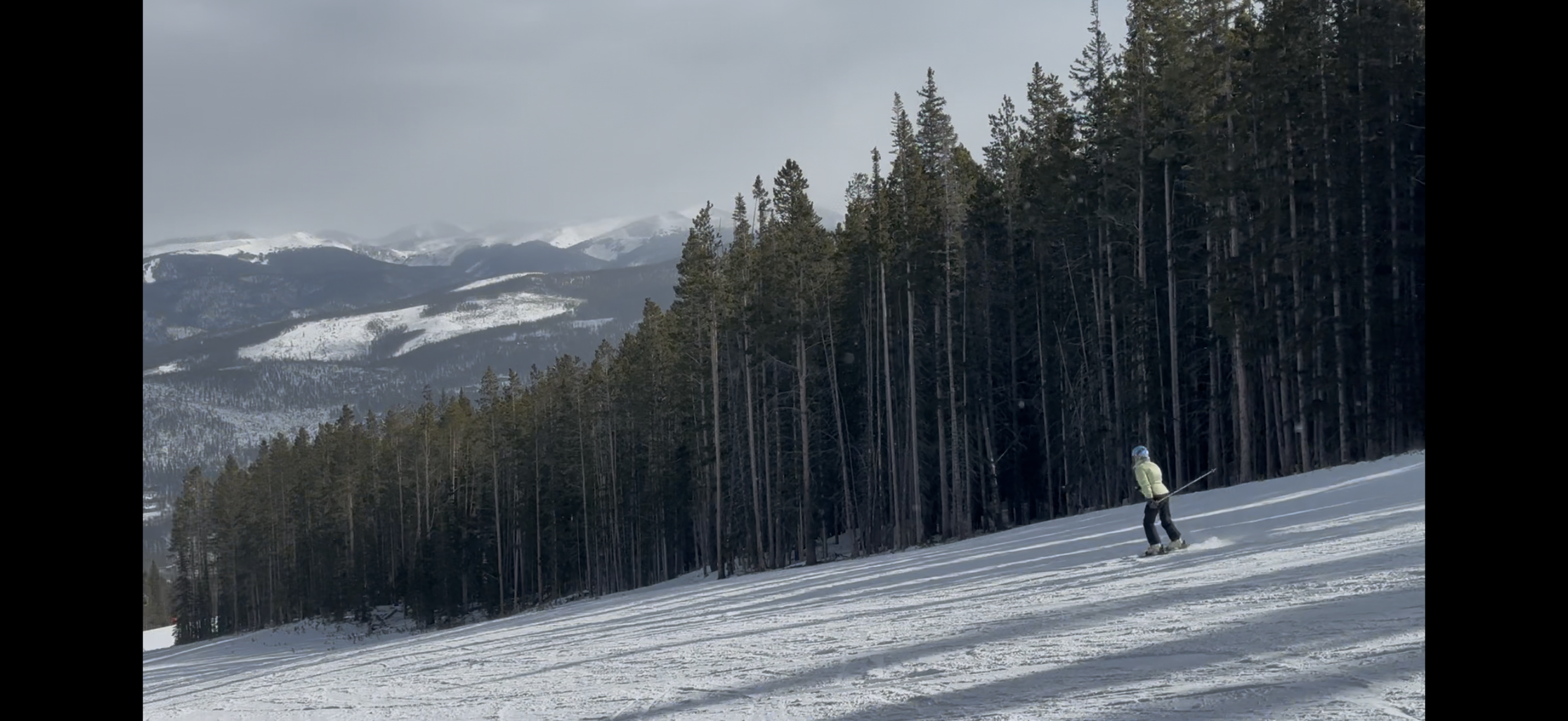
That's the vertical distance I have skied.
That's 176 kilometers.
That's 109 miles.
No, I didn't do it in one day.
No, I didn't do it in one year.
I did it in over 5 years.
In work and life, we often are paralyzed by the big goal.
It feels like looking up at a peak you can't reach.
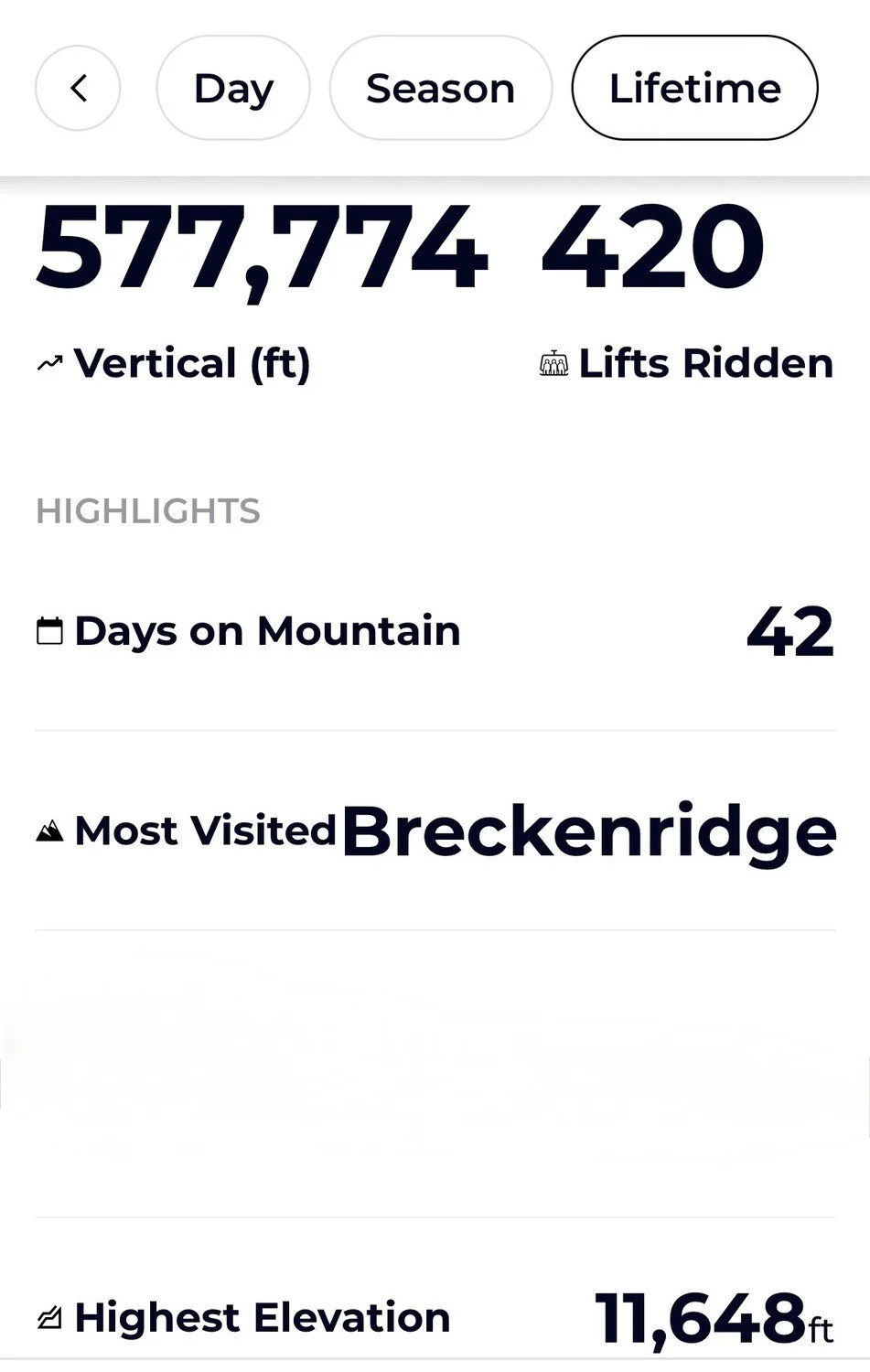
Make small steps each day, just like what I did.
Before you know it, you are at the top of the mountain.
What's your mountain moment that you would like to share?
Hi, I am Tina
"Hi, I am Tina. "
"Hi, I am Hope." I said while we shook hands.
"Oh, what a beautiful name!"
"Thank you!"
"I wish I could have that name"
"You can give yourself that name if you want."
"I can? Really?"
"Yes, why not? You can give yourself any name you want."
"I am not sure. I don't know whether my parents would be happy about it."
"Ask them."
"They are dead."
Tina is a 50-year-old, lovely woman.
She is still living her dead parents' expectations.
Whose expectations are you living?
The hardest negotiation
One of the hardest negotiations is to negotiate with yourself.
A so-so job, settle or explore?
A lukewarm marriage, leave or stay?
Bone-chilling temperature, to go out or stay in?
6 am, get up and head to the gym, or snooze the alarm and stay in the warm bed?
10 pm, to shut down digital devices and go to bed, or continue to scroll to exhaust all stories?
An exciting opportunity, to go with it even though it's not aligned with my goal, or to thank them for the chance and focus on what's more important?
You have to convince yourself that the decision you are making is better for you.
You have to be clear about your decision tree.
You have to have a system so that when your mind is weak, your system is strong.
You have to enroll accountability partners so that you are compelled to make better decisions because others are watching.
Become a skillful negotiator.
I am promoted!
I LOVE to hear this from my clients.
Usually, they have been working on this promotion for quite a while.
Before our coaching,
❌ they had not had a skip level 1:1
❌ they didn't know who the key stakeholders were
❌ they didn't ask their manager directly for the promotion
❌ they didn't advocate for what they have done
❌ they didn't build strategic relationships
❌ they wasted their time and energy on things that do not matter
Since we work together, they have gotten better at
✅ asking for salary raises.
✅ attracting people to work with them.
✅ securing the next-level promotions.
✅ networking both internally and externally.
Appearance
How you show up sends out a message to the world.
People make a judgment about you and your ability in a few seconds, whether you like it or not.
Your appearance is a part of the winning equation.
Yes, some tech CEOs wear a black t-shirt seven days a week, so that they don't need to spend time and energy deciding what to wear.
That's very commendable.
After all, all we have is time.
They can do that because they have other qualities that project confidence and competence to themselves and others.
Most people would benefit from projecting more confidence and competency through their appearance.
Most importantly, it sends a message to ourselves, consciously or unconsciously.
I have been working from home since March 2020, when the whole world returned to home during the COVID-19 pandemic.
Every morning, after gym, I put on my lovely professional attire and walked to my home office.
That's my signal of "time to work".
I am always camera-ready.
I am always ready to project my confidence and competence...to myself and others.
Here is the real secret: it takes me 2 seconds to pick out my attire every morning, and that's 2 seconds that I am willing to spend.
What do you think about appearance?
Human and AI
He was 19 years old when he tried a drive-through for the very first time.
He had an extremely frustrating experience.
He tried the drive-through again, 6 years later.
The people taking his order didn't have the time, patience, or skills
They tried to "help" him by finishing his sentences, but it only made things worse.
He knows what to say and how to use the words correctly.
All he needed was more time.
But with AI trained on his speech pattern, he can enjoy a drive-through without the fear or embarrassment.
Wendy'sFreshAI made him feel respected like others.
AI was patient with him.
AI waited for him to finish.
AI understood his order.
He is Travis Althouse, who has a stutter.
Thanks to Will Croushorn, MBA, for showcasing what AI can do for people who are in need.
Thank you Michael Chorey for starting the feature initially.
Stories like that of Travis Althouse expand my heart and mind.
Technology should not just be for some of us.
We need to ask ourselves:
Who is benefiting from technology?
Who is left behind by technology?
This is a question we all need to ponder and make an effort to even the playing fields.
Thank you Summer Crenshaw , Zack Huhn, and all the teams at Enterprise Technology Association for creating such a sacred space for all of us to learn and connect, human to human, at Columbus AI Week .
I can't do it anymore.
Not even one more step.
I want to stop.
Maybe I can walk instead of running.
No, I don't think I will be able to resume running if I start to walk.
Okay, let's set a goal of not walking.
I won't stop running, even though my leg is so heavy.
Let me listen to my own breath.
2 steps every breath.
Let's keep the rhythm.
But it's too hot.
The sun is too strong.
It's so humid.
It's okay, soon it will be over.
These were the thoughts that ran through my head after completing a 5K, biking for 10 miles, and embarking on a second 5K.
Under the hot sun in Tarpon Springs, Florida.
Every race is a race between our own body and our own mind.
I don't think I can do it.
Yes, I can.
I kept debating until I reached the finish line.
Yes, I can.
I finished the duathlon.
People cheered me on along the way.
All of a sudden, I thought, "That was fun, I can do this again".
Isn't that similar to what we experience when we go through life?
We persist during challenging times, with the support of friends, family, and strangers.
We emerge stronger on the other side with a richer experience.
Thank you Dawn Vishey, MA and Karen Traugh for inviting us to join you.
Thank you Cherie Harrington, CPC for being a supportive stranger turned friend.
Moon Cakes
This past Monday was the Moon Festival, a tradition celebrated for thousands of years in Chinese culture.
A special treat on this day is eating the moon cakes.
I have watched and assisted my mom in making them.
I have watched and assisted my friends in making them.
Because of the intricacy it requires, I made up my mind I would NEVER make them myself.
I would rather read a book or take a walk with that kind of time it takes.
"NEVER say NEVER".
On this Moon Festival, I found myself digging out the recipe I had saved for years.
I dusted the mold I purchased several years ago, and never attempted to use.
I purchased all the ingredients.
Before I knew it, I was making Moon Cakes.
Here is what I learned through this process:
It looks harder than it actually takes. Once you start, it's not that bad. Just START!
You won't know the process fully until you are in the driver's seat. I have assisted many times, and I thought I knew. No, I don't.
Your first try won't be perfect. If it is perfect, you are either lucky or talented or both.
You turn to the expert when it didn't go well. The expert can help you pinpoint why it cracked even though you were following the instructions precisely. Just because you have the knowledge doesn't mean you have the skills.
Once you "failed", you can make adjustments to make it better.
Once you are skilled in the process, you can innovate to make it your own. I adjusted the ratio of the filling to suit my family's preferences.
These are the leadership lessons I pondered while making the moon cakes.
If you want some moon cakes, become my friend.
I didn't turn on my mic
I was co-presenting with - Patrick Donadio, MBA, CSP, MCC on Communicating Your Value: Strategies to Articulate Your Unique Value, Increase Visibility, and Expand Your Professional Network at the NSA Ohio Communication Mastery annual conference.
Patrick started our presentation. To avoid any potential echo, I turned off my mic.
When it was my turn, I was more than ready.
I started strong by asking the big roomful of people, "Who is a brand for"?, except my mic was never turned on.
After 30 seconds or so, my speaker friend, Michael Davis, shouted at the back, "Your mic isn't on!"
Did I feel embarrassed? NOOOO!
I felt grateful that Michael reminded me.
That was the end of the story!
NO, it wasn't.
Later in our presentation, it was my turn to speak about "Amplify Your Brand".
I started with this.
Well, I kind of already demonstrated what it looked like when our voice didn't get amplified.
When I didn't turn on my mic, yes, I have a voice, but it wasn't amplified.
When you are clear about your brand and who you serve, you can communicate your brand with confidence, authenticity, and vulnerability.
But you are still only one person and one voice.
Who can be your brand ambassadors?
Who can be your mic?
Leadership lessons:
Leaders don't sweat the small things.
Leaders focus on the big picture.
Leaders show gratitude.
Leaders don't waste a failure moment.
Leaders use humor strategically (if you can laugh at yourself, you are more approachable).
Who are your mic?
What's the last time you turned a "disastrous" moment into a leadership moment?
Thank you Nan Li, MBA for a great picture.